

How we set pricing for ultra-fast charging
We often hear drivers express concern about the lack of transparency around public charging prices. In this story, we're sharing more information about how our pricing works and explaining some factors that influence the price per kWh you see at our charging points.


Running and developing a high-power charging network involves a range of costs – from securing suitable land and connecting sites to the grid to maintaining and powering chargers across Europe. These investments are what make fast, reliable, and future proof charging possible, and the price per kWh reflects the effort required to deliver that quality of infrastructure.
As a Charge Point Operator (CPO) that provides ultra-fast charging in 24 countries, our network incurs higher costs than those operating in just one or two countries, and our business strategy may appear different from other CPOs. More importantly, we need to balance offering charging at fair rates with ensuring drivers can still benefit from the latest technology in the destinations they are travelling to.
How does our pricing relate to our mission?
Our mission is to deliver true high-power EV charging across Europe and build products around the lifestyle of EV drivers, that are fast, reliable, and simple to use. With IONITY Locations in 24 countries and charging power of up to 600 kW, we’re helping to shape a cleaner future by providing the confidence to go further and charge faster.
However, with only around 2%1 of cars on our roads today being EVs, network utilisation is still low, and that’s before you consider how many drivers can charge from home. Having more EVs on the road will enable CPOs to operate networks more efficiently through economies of scale; however, while the charging market is still relatively young, CPOs need to generate enough revenue to cover both operational costs and support network development.
Why are there different ways of pricing EV charging?
Charging in different locations comes with varying costs, which affect the total amount a driver pays to charge their EV. For example, charging at home is usually cheaper than public charging because electricity is drawn directly from the household supply (at a much slower rate) - while public chargers involve additional infrastructure, maintenance, and service costs.
We often compare the two charging models to tap water versus bottled water, as while both serve the same purpose, the pricing structure is vastly different due to the infrastructure and logistics involved. Tap water is easily accessible using infrastructure already built into your home, while bottled water requires preparation, processing and packaging before being sold to you.
The difference is that it takes hours to top up your battery with a lower power at home instead of minutes at a public charger, where you can save time and get back on the road quickly.
How do we set our pricing?
Three main types of costs need to be covered to establish and operate a pan-European charging network successfully.
The first is for the energy itself and includes costs like the rate per kWh and the fixed demand charges paid to energy providers. It also includes taxes and fees levied by the government, which can vary significantly across countries. For example, in the UK, public charging is currently taxed at 20%, while charging at home is taxed at the domestic rate of 5%. Even if a country has a low domestic electricity price, this combination of costs usually accounts for around half of the operational cost that our charging price per kWh covers.
The second is for network development and includes staffing costs (e.g., operating a 24/7 customer support line), business administration and overheads. It also accounts for the profit that allows us to build a sustainable business and reinvest in the development of new charging sites.
The third is for site expenses like land rent, revenue share for our network partners, servicing and maintenance.
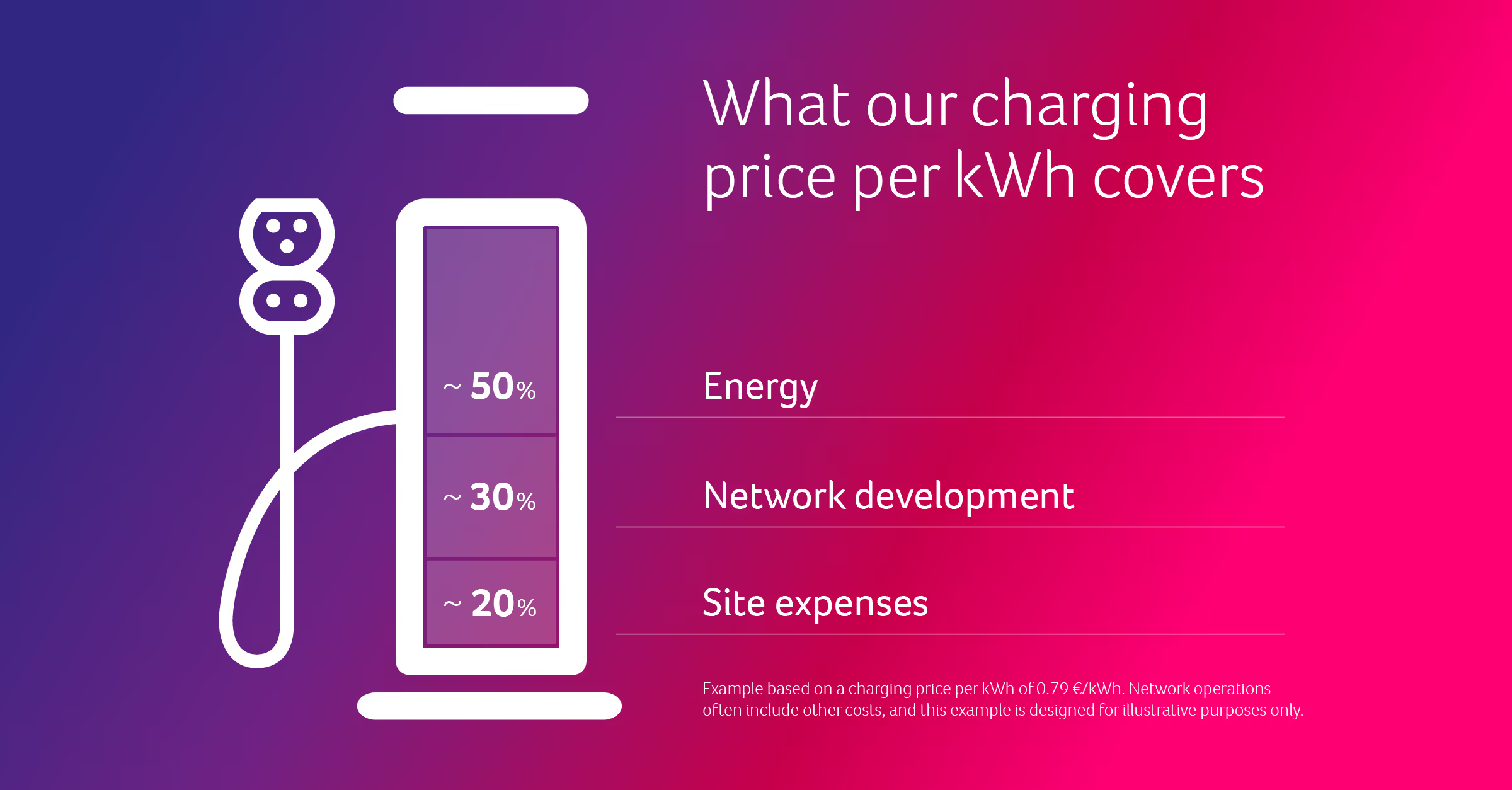
While the example above uses a charging price of 0.79 €/kWh, our pricing will vary depending on where you are charging. For example, the charging price may be higher in the UK if the energy cost is higher in that country.
What else does our pricing cover?
While what we’ve covered previously highlights the main types of costs we need to cover, it doesn’t demonstrate how we continue to reinvest the funds we generate to improve the experience our customers have with the network.
From purchasing the latest high-power chargers and developing our app to provide a more personalised experience, to improving access to our network via partnerships with Mobility Service Providers and initiatives like ChargeLeague, we aim to put the driver at the heart of the network, and this is a guiding principle for how and where we invest.
Setting pricing in a highly dynamic and young market is a challenge. However, we aim to offer fair and transparent pricing, so drivers know how much they can expect to pay before arriving at the charging site.

Drivers can always check the applicable price for a specific charging location in the IONITY App before starting a charging session, allowing them to make informed decisions in advance. In addition, we are seeking to develop the best offers for EV drivers who need fast, reliable and convenient charging across Europe - and these will naturally need to evolve as the market does.
Why do we offer different levels of pricing?
We offer different pricing levels to suit the needs of a range of EV drivers. From regular users to those who only top up on a road trip, we understand that charging needs vary and have developed products to suit. In addition, we aim to reward our loyal customers by offering them more attractive charging prices per kWh, which they can benefit from across our entire pan-European network.
When we know that we can cover most of our costs, we can have the confidence to offer greater savings. For example, an increase in network utilisation has allowed us to introduce lower charging prices per kWh with our monthly subscriptions, and to provide an additional discount to drivers who opt for our annual subscriptions.
Operating the largest high-power charging network in Europe, which is accessible to all EV drivers, comes with high costs and means we won’t always be able to offer the lowest prices. Our mission is to deliver true high-power EV charging across Europe, and stable pricing is key to enabling network development and expansion, while also ensuring our network is fit for drivers today and into the future.
Regardless of how you like to charge, you can benefit from fast charging at fair rates with IONITY. To learn more about our products, visit our subscriptions page.
Lasīt vairāk

Whether you’re a local or just visiting, you can now access our network directly while charging in Portugal.

Where did EV drivers charge most often during summer 2026? We analysed charging data from across the IONITY Network to uncover the five most-visited charging stops of the season.